How to Prepare for Surgery: The Complete Prehabilitation Guide

You can do far more than wait for your surgery date. Here is how to use the weeks beforehand to recover faster — the science of prehabilitation, in four pillars.
If you have an operation on the calendar, it is natural to feel that all you can do now is wait for the day to arrive. But you can do far more than wait. The weeks before surgery are one of the biggest opportunities you have to shape how well you recover — and the science behind using them well has a name: prehabilitation.
Prehabilitation, or "prehab," is the process of preparing your body and mind for surgery through specific, targeted actions in the weeks beforehand. The idea rests on a simple but powerful insight: your recovery does not rest on your surgeon alone. It takes three people working toward the same goal — what I think of as the surgical triad: the surgeon performing the operation, the anesthesia team keeping you safe and comfortable, and you, arriving in the best possible shape. For the first time, you are not a passive participant waiting to be operated on. You are an active member of your own surgical team.
It helps to picture your body's resources as bank accounts — reserves of strength, nutrition, lung capacity, and resilience. Surgery is a large, sudden withdrawal from those accounts. Prehabilitation is the chance to make deposits before the withdrawal, so you have more to draw on when recovery asks the most of you.
The four pillars of prehabilitation
The research points to four areas you can actually influence, each with a measurable effect on how you come through surgery.
1. Nutrition
What you eat in the weeks before surgery changes how you heal afterward. Three things matter most. Protein gives your body the raw material to preserve muscle and repair tissue; eating more of it beforehand is linked to less inflammation, shorter hospital stays, and better strength during recovery. Carbohydrates, in the form of a special drink taken the night before and the morning of surgery, can reduce thirst, hunger, anxiety, and even pain in those first hours afterward. And correcting a vitamin D deficiency — very common, and easy to miss — is tied to a lower risk of surgical-site infection.
2. Physical fitness
How fit you are on the day of surgery is one of the strongest predictors of how well you recover, whatever your age or diagnosis. Building fitness beforehand means fewer complications and a faster return to your feet. It comes in three parts: aerobic fitness (interval walking is enough for most people), practical strength (the muscles you use to get out of bed, stand, and climb stairs), and balance (to prevent the falls that so often derail a recovery). Every level, from someone who is currently very active to someone who finds standing up an effort, has a version that fits.
3. Respiratory fitness
This is the one people overlook — I overlooked it myself. Your breathing muscles can be trained just like the muscles in your arms and legs, using a small handheld device that adds resistance as you breathe in. A few minutes a day in the weeks before surgery meaningfully lowers your risk of lung complications like pneumonia, which are among the most common problems after major operations. And if you smoke, stopping even a few weeks beforehand is one of the single most powerful things you can do.
4. Psychological preparedness
Facing surgery is as much a mental challenge as a physical one, and your state of mind genuinely affects your body. High stress and anxiety before an operation are linked to more pain, more complications, and longer recovery. Lowering them — by learning what to expect, practising slow breathing, using calming visualization, and leaning on the people around you — is not just about feeling better. It creates better conditions for your body to heal.
The one rule that matters most
If you take nothing else from this guide, take this: doing something is always better than doing nothing, and the goal is progress, not perfection. You do not need to do everything. One change to your nutrition, your activity, or your mindset will help. Two will help more. And if some days you manage only a little — or nothing at all — that is simply the reality of preparing for surgery while life continues around you. It is not failure. You work from wherever you are that day.
One more essential step: talk with your surgical team about your plan. Most will welcome your initiative, and some conditions change the advice — which is exactly why your own team should tailor it to you.
By reading this, you have already turned passive waiting into active preparation. That matters more than you may realize right now.
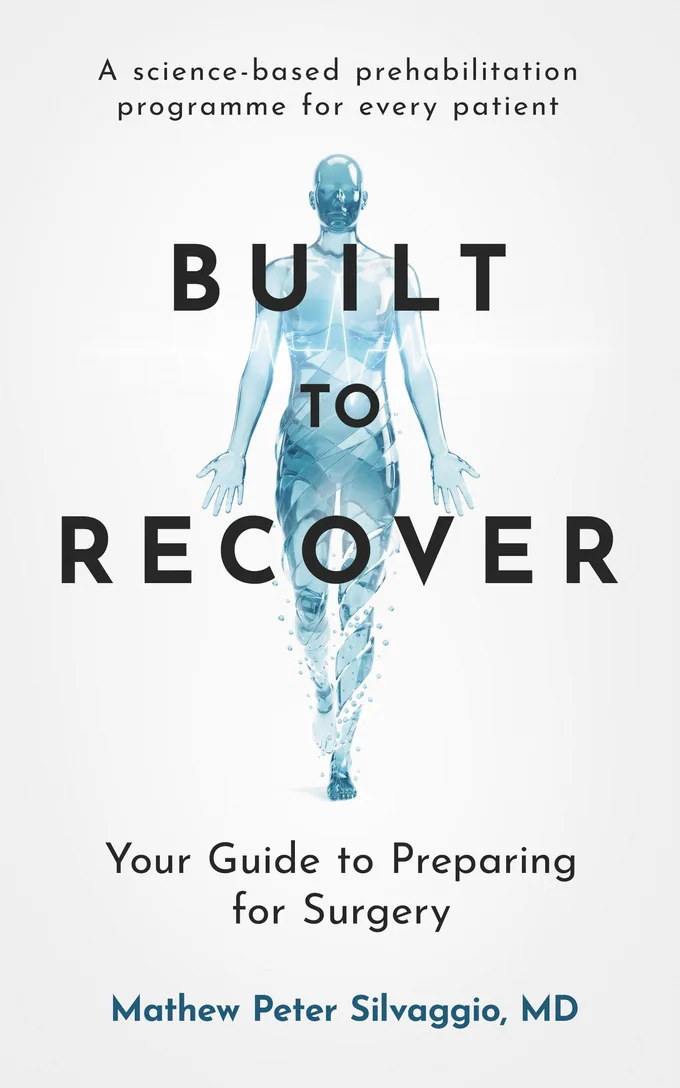
Built to Recover
The complete, step-by-step prehabilitation programme — with exact amounts, timing, and important safety guidance. eBook coming soon.
This article is for general educational purposes only and is not medical advice or a substitute for the judgement of your healthcare team. Always talk with your own surgeon or surgical team before making changes before surgery.